
Love More, Not Less
Thich Nhat Hanh, the Zend Buddhist master, has some intertesting advice about what it means to truly let go. Many people mistage detachment or non-clining to be a form of aloofness, or emotional disconnect from others, but as Hanh explains, truly letting go often means loving someone more than you have ever loved them before.
The Buddha taught that detachment, one of the disciplines on the Noble Path, also called ariyasaavaka, is not a physical act of withdrawal or even a form of austerity. Though the Buddha teaches of a ‘non-action which is an integral part of the Right Way,’ if it is taken out of context it can give the impression that we should develop a lack of concern for others, and that we should live without truly feeling or expressing our emotions–cutting ourselves off from life.
These type of misinterpretations are sadly common, since there are not always direct translations from the Paali language into English.
This form of detachment is an erroneous understanding of the Buddha’s message. Master Hanh states that to truly let go we must learn tolove more completely. Non-attachment only happens when our love for another extends beyond our own personal expectations of gain, or our anticipation of a specific, desired outcome.
Hanh describes four forms of complete detachment, which surprisingly, aren’t about holing yourself up in a cave and ignoring everyone who has broken your heart, or ignoring your lust or desire for a romantic interest. This is not detachment. Letting go means diving in.

Maitri (Not the Love You Know)
Hanh describes the importance of Maitri, not love as we normally understand in a Westernized use of the word. He states:
The first aspect of true love is maitri (metta, in Pali), the intention and capacity to offer joy and happiness. To develop that capacity, we have to practice looking and listening deeply so that we know what to do and what not to do to make others happy. If you offer your beloved something she does not need, that is not maitri. You have to see her real situation or what you offer might bring her unhappiness.
The first aspect of true love is maitri (metta, in Pali), the intention and capacity to offer joy and happiness. To develop that capacity, we have to practice looking and listening deeply so that we know what to do and what not to do to make others happy. If you offer your beloved something she does not need, that is not maitri. You have to see her real situation or what you offer might bring her unhappiness.
In other words, your detachment may come in accepting that certain things you would normally do to make another person feel loved and appreciated may not be what the person you are actively loving now, needs. Instead of forcing that behavior on another person, with an egoic intent to ‘please’ them, you simply detach from that need in yourself, and truly observe what makes another person feel comfortable, safe, and happy.
He further explains:
We have to use language more carefully. ‘Love’ is a beautiful word; we have to restore its meaning. The word ‘maitri’ has roots in the word mitra which means friend. In Buddhism, the primary meaning of love is friendship.

Karuna (Compassion)
The next form of true detachment is compassion. When we let go, we don’t stop offering a compassionate touch, word, or deed to help someone who is in pain. We also don’t expect to take their hurt or pain away. Compassion contains deep concern, though. It is not aloofness. It is not isolation from others.
The Buddha smiles because he understands why pain and suffering exist, and because he also knows how to transform it. You become more deeply involved in life when you become detached from the outcome, but this does not mean you don’t participate fully–even in others’ pain.
Gratitude and Joy
In truly letting go you practice gratitude. Mudita, or joy arises when we are overcome with gratitude for all that we have, such that we no longer cling to some other longed-for result. The Buddha’s definition of joy is more like ‘unselfish joy.’ It means that we don’t only find happiness when something good happens to us, but when others find happiness.
If you’ve ever had to say goodbye to a love or friend so that they could continue on their life’s path–one that may not have continued to intertwine with your own–you may have felt pain when they found someone new to love, or made a new friend that seemed to take your place. This is not true detachment. Joy arises when you find happiness even when others find joy–and it has little or nothing to do with you.
Upeksha (Equanimity)
Master Hanh describes the final quality of true love which sheds inordinate light on the true process of letting go. He states:
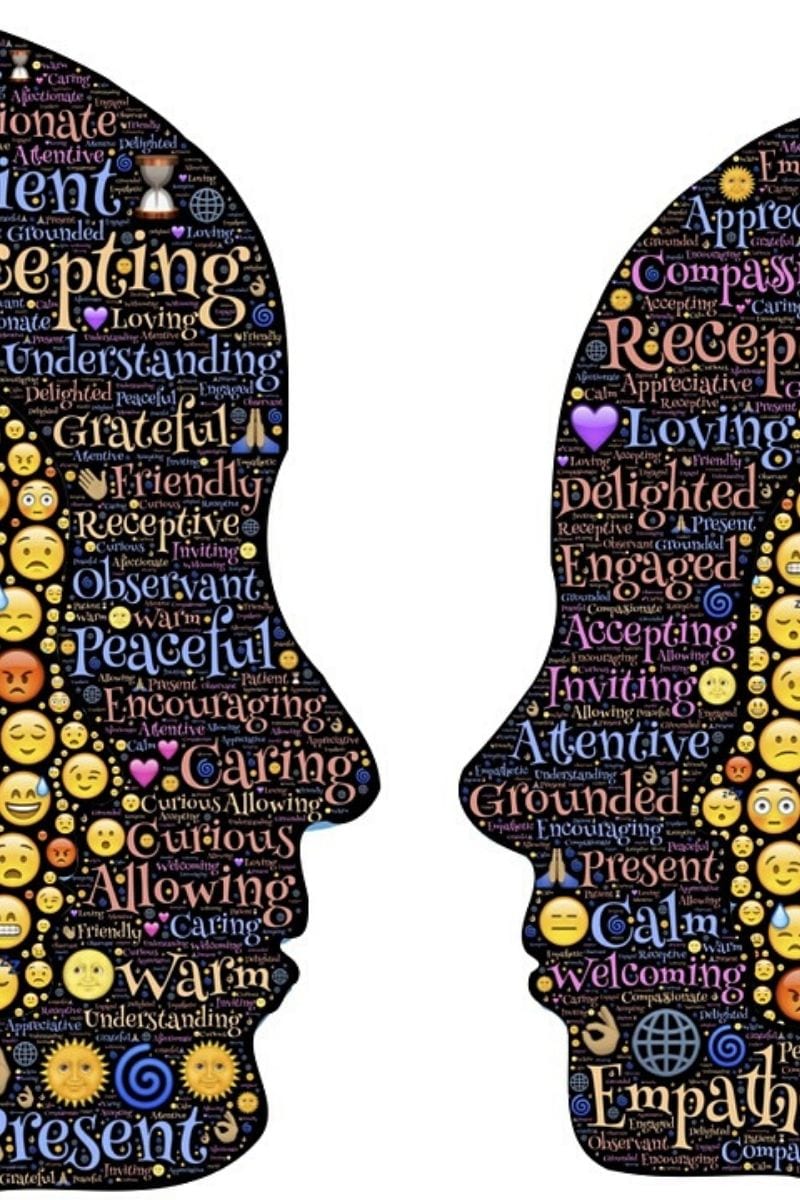
The fourth element of true love is upeksha, which means equanimity, non-attachment, nondiscrimination, even-mindedness, or letting go. Upa means ‘over,’ and iksha means ‘to look.’ You climb the mountain to be able to look over the whole situation, not bound by one side or the other. If your love has attachment, discrimination, prejudice, or clinging in it, it is not true love.
People who do not understand Buddhism sometimes think upeksha means indifference, but true equanimity is neither cold nor indifferent. If you have more than one child, they are all your children. Upeksha does not mean that you don’t love. You love in a way that all your children receive your love, without discrimination.
Hanh explains that without this quality our love tends to become possessive–a stomping ground of the ego. We try to put our beloved in our pocket and carry them with us, when they are more like the wind, or a butterfly, or a stream, needing to move and flow, or risk dying. This is not love, this is destruction.
For love to be true love, it must have elements of compassion, joy, and equanimity–and this is truly letting go.
The Art of Letting Go is Artless
The real secret is that letting go is not an art, it is an allowing, a being. A non-attached relationship is healthy, strong and filled with effortless love, kindness and compassion. It is completely selfless because your sense of ‘self’ is no longer asserted in every situation. If you want to truly let go, you’ve got to love more, not less. This is the most common misunderstanding about this priceless teaching of the Buddha.
Source: Uplift Connect